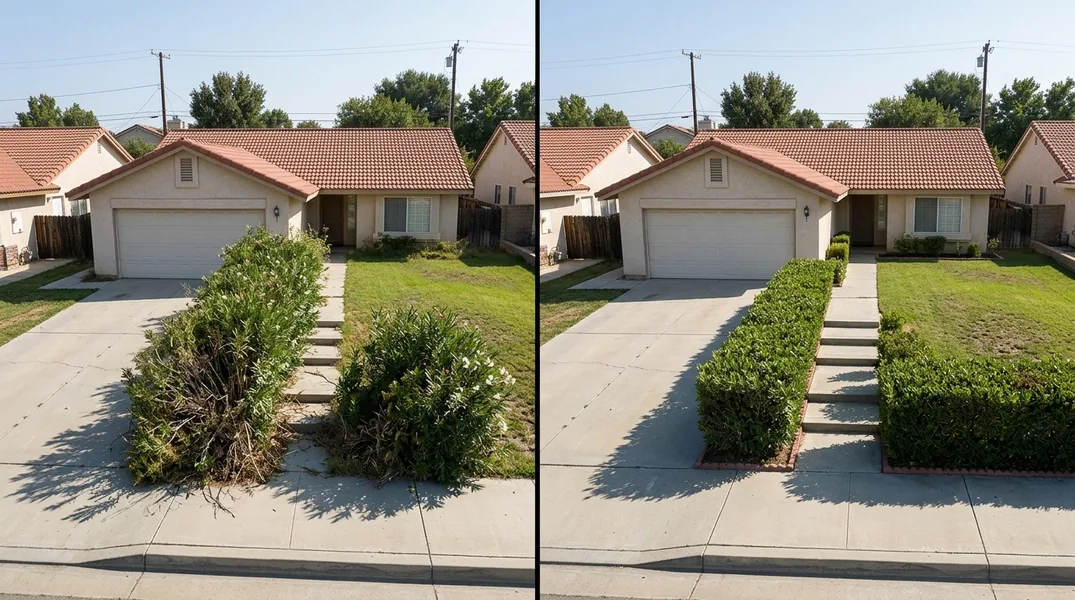
Tree Trimming vs Tree Removal: Understanding Your Options
When you're looking at a struggling tree in your Temecula yard, the decision between Tree Trimming & Pruning and Tree Removal isn't always obvious. Many homeowners assume that a tree showing signs of decline must come down, but the truth is far more nuanced. A tree that appears unhealthy today might recover beautifully with proper care, while another tree that looks fine on the surface could pose serious safety risks to your home and family.
The key difference lies in understanding what each service accomplishes. Tree trimming focuses on removing dead, diseased, or overgrown branches to improve the tree's health, appearance, and structural integrity. It's a restorative process that can extend a tree's lifespan by decades when done correctly. Removal, by contrast, is a permanent solution reserved for trees that are beyond recovery, pose immediate danger, or are simply in the wrong location for your property's needs. Before making an irreversible decision, it's worth getting a professional assessment to determine which path makes sense for your specific situation.
Signs Your Tree Can Be Saved with Proper Trimming
Many Temecula homeowners are surprised to learn that trees showing moderate stress or damage can often be restored through expert pruning. If your tree has dead branches mixed in with healthy green growth, if it's been damaged by storm or weather but still has a strong root system, or if it's simply overgrown and crowding your landscape, trimming is usually the right first step. Trees with crown dieback affecting only a portion of the canopy, or trees that have grown too large for their space, respond remarkably well to strategic pruning that removes problem areas while preserving the tree's essential structure.
The presence of some pest damage or minor disease doesn't necessarily seal a tree's fate either. If the damage is contained to certain branches rather than spread throughout the entire tree, removing the affected limbs through Tree Trimming & Pruning can halt the problem's progression and allow the tree to compartmentalize the wound. Young to middle-aged trees with good overall form and vigor are especially likely to bounce back from pruning. Even aesthetic concerns like unbalanced growth, low-hanging branches interfering with structures, or crossing branches that rub together can all be addressed through trimming without sacrificing the tree itself.
Hazard Tree Assessment in Temecula: When Removal Becomes Necessary
Not every tree can or should be saved, and recognizing when a tree has crossed the line from salvageable to dangerous is crucial for protecting your property and loved ones. A hazard tree assessment evaluates structural integrity, disease progression, and risk factors that determine whether a tree should come down. Trees with major structural defects like deep cavities, significant lean, or multiple large cracks in the trunk often lack the integrity to stand safely long-term. Similarly, trees where disease has killed more than fifty percent of the crown, or where pest damage has girdled the main stem, rarely recover even with aggressive pruning.
Environmental factors specific to the Temecula area also influence removal decisions. Trees growing too close to power lines, those with root systems damaging foundations or undermining hardscape, and trees positioned where a failure would strike your home or a neighbor's property should be evaluated seriously for removal. Additionally, if a tree is of a species known to be short-lived or particularly prone to failure in our local climate, it may make financial sense to remove it and replant with a more suitable species. Trees that have already failed partially, with large broken branches or exposed wood, are typically beyond the point where trimming offers meaningful benefit.
The Professional Hazard Assessment Process
A proper hazard tree assessment goes far beyond a casual glance at your yard. Professional arborists use systematic evaluation methods to examine bark condition, branch attachment angles, signs of disease or pest infestation, soil stability around the root collar, and the tree's proximity to structures or utilities. They look for red flags like cavities that have enlarged significantly, branch unions with included bark that indicate weak attachment points, and evidence of internal decay that might not be visible from the ground. This comprehensive approach ensures that the recommendation to trim or remove is based on objective criteria rather than guesswork.
We'll discuss the specific defects observed, the likelihood of failure, and the potential consequences if the tree were to fail. This transparent process helps you make an informed decision that considers both the tree's health and your property's safety. If trimming is recommended, we'll outline a specific pruning plan. If removal is necessary, we can discuss options including Stump Grinding and replanting suggestions for your landscape.
Cost Considerations: Trimming Versus Removal
The financial aspect of tree care often influences homeowner decisions, and it's worth understanding how costs break down between trimming and removal. Tree trimming is typically the more economical option upfront, especially for smaller to medium-sized trees. A single trimming session might cost a fraction of what removal would run, and since trimming can be repeated periodically as needed, it spreads costs over time. For trees that are fundamentally healthy but just need maintenance, regular trimming every few years is far less expensive than eventual removal and replacement.
However, removal costs vary significantly based on tree size, location, accessibility, and proximity to structures. A large tree growing near your house or power lines requires more careful, skilled work than one in an open yard, which drives up the price. When you factor in Stump Grinding and potential replanting, removal becomes a substantial investment. That said, removing a genuinely hazardous tree is often less expensive than dealing with property damage from a tree failure. The smartest approach is to get a professional pricing assessment for your specific situation. Temecula Tree Service offers free consultations so you can understand your options and associated costs before making a decision.
Making Your Decision: Next Steps for Temecula Homeowners
If you're uncertain whether your tree should be trimmed or removed, the best first step is a professional evaluation from an experienced arborist. Rather than making an emotional decision based on fear or assumptions, let the tree's actual condition guide your choice. A certified professional can assess whether the tree has genuine recovery potential or whether removal truly is the safer, smarter option. Many trees that homeowners assume are goners can be brought back with proper care, while some trees that look fine are quietly failing and pose hidden risks.
Contact Temecula Tree Service today at (951) 517-2908 or request a free estimate to have your tree professionally evaluated. We'll provide an honest assessment and clear recommendations tailored to your tree's condition and your property's needs. Whether your tree needs expert trimming to thrive again or removal for safety and peace of mind, we have the skills and equipment to handle the job right. Don't let uncertainty cost you a healthy tree or put your home at risk. Let us help you make the best decision for your landscape and your family's safety.
Looking for a professional tree service contractor in Temecula? Temecula Tree Service responds fast for all your tree service needs.
Get a Free QuoteOur services: Tree Removal · Tree Trimming & Pruning · Stump Grinding